Thread isn't ink
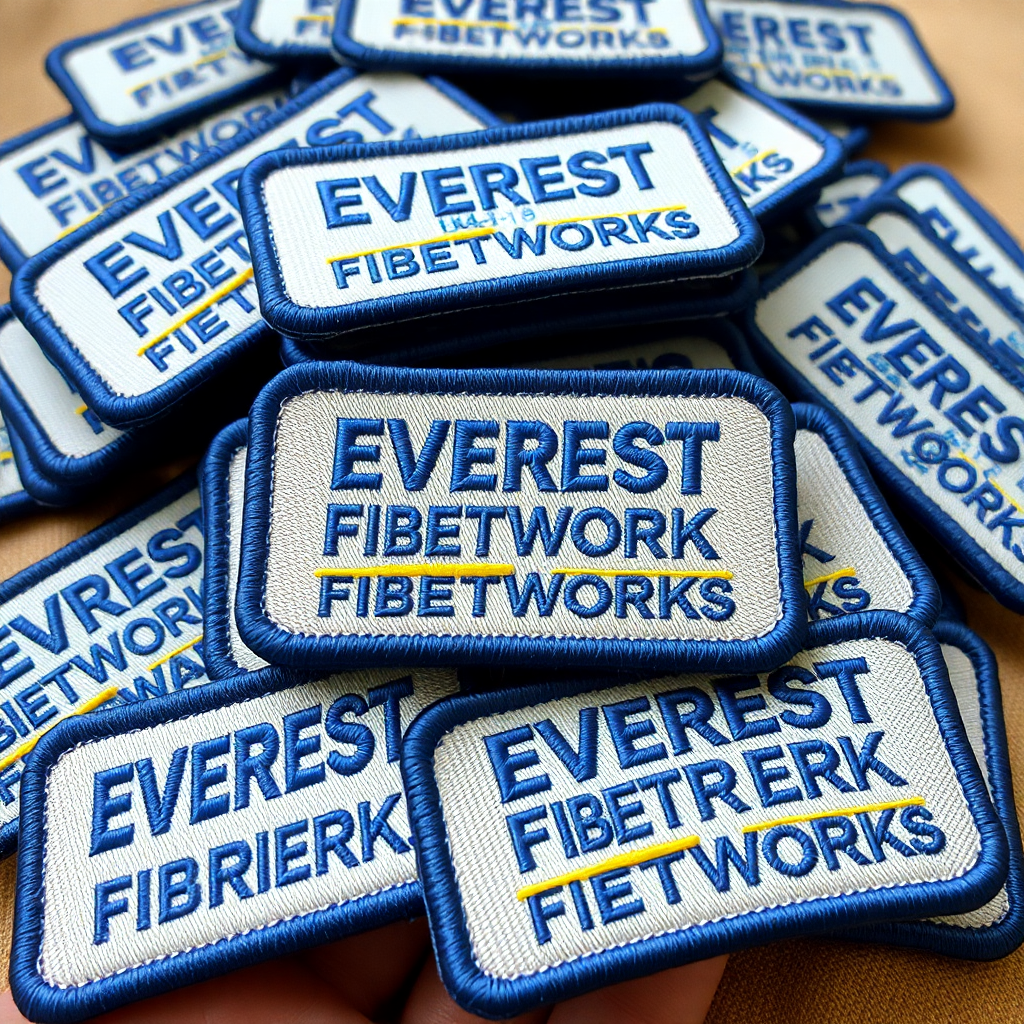
When a design is printed, the printer can place tiny dots of color almost anywhere. Embroidery works differently. Every shape is filled with real thread, and thread has width. Lines that are too thin disappear, small gaps fill in, and each color means another thread change on the machine.
That doesn't mean detailed logos can't be embroidered. It means most designs need a few small decisions before digitizing starts, and a good digitizer will make many of them for you. Knowing what those decisions are helps you brief the job properly.
The usual trouble spots
Small text
Lettering causes more problems than anything else. As a general rule, letters under about a quarter of an inch tall start to lose clarity in thread, especially thin lowercase or serif fonts. If your logo carries a tagline in tiny type, it's often better to leave it out of the embroidered version or make it a little bigger.
Gradients and photographic detail
Thread comes in solid colors. A smooth fade from light blue to dark blue can be approximated with stepped blocks or blended stitches, but it will never look like the screen version. Usually the best move is to simplify the gradient into two or three flat tones.
Too many colors
Every extra color adds a thread change and more machine time. Most logos look best in a handful of thread colors. If yours has ten similar shades of green, we can usually merge them without changing how the logo reads.
Hairlines and tight gaps
Very thin outlines and narrow spaces between shapes tend to fill in or look uneven once stitched. Slightly heavier lines and a bit more breathing room make a big difference.
Size and placement change the design
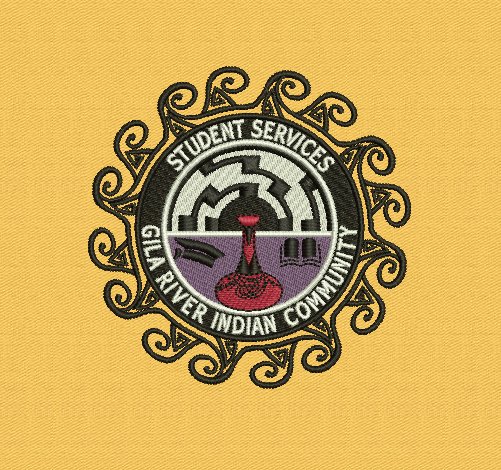
The same logo can't simply be shrunk or stretched onto every garment. A left-chest logo is usually around 3.5 to 4 inches wide. A cap front is smaller and curved, so detail has to be simplified. A jacket back is far larger, which leaves room for more detail but also uses many more stitches.
As a rough guide, small placements such as a left chest or cap run up to about 8,000 stitches, a small jacket back is closer to 15,000, and a full back can go well beyond that. More stitches mean more time on the machine, which is why digitizing is priced by placement. Our digitizing pricing shows starting rates for each size.
Fabric matters as well. A stretchy polo, a structured cap and a thick fleece all react differently to stitching, so density and underlay are set for the material you'll actually be using. Tell us the garment and we'll set the file up for it.
What to send with your artwork
- Your logo in the best quality you have. Vector is ideal, but a low-resolution image or even a rough sketch is often enough to start.
- The final stitched size, in inches or millimeters.
- What it's going on: polo, cap, jacket, bag or something else.
- Thread colors or Pantone values, if you have them.
- The file format your machine reads, such as DST, PES, EXP, JEF, XXX or VP3. We can supply several formats at no extra cost.
If your logo is stuck in a blurry file, cleaning it up first can help. We covered why in our guide to raster and vector files.
Check the stitch-out before you approve
We send a stitch-out preview before the file is final, and it's worth a proper look. Check that small text is readable, that colors are where you expect them and that nothing looks bunched or gappy. It's much easier to fix a file at this stage than after a hundred shirts have been embroidered. Revisions are included until you're happy.
Mistakes that cost time
- Resizing a finished file. Scaling a digitized file up or down by more than a small amount can throw off the density and cause thread breaks or gaps. Tell us the final size up front instead.
- Skipping the fabric. A file made for a polo won't necessarily run well on a cap.
- Trying to fit everything in. A full logo with a web address and tagline on a cap front usually ends up crowded. Choose what matters most.
- Approving without looking. A few minutes with the preview is the cheapest quality control there is.
Ready to get a file made? Tell us about your project and we'll reply with a free quote, usually within one business day.
Want a clean, machine-ready file?
Send your logo and placement details. We digitize by hand for your fabric and reply with a free quote.
Get a Free Quote →